Functional medicine vs. traditional healthcare sets the stage for this enthralling narrative, offering readers a glimpse into a story that is rich in detail and brimming with originality from the outset. As we delve into the realms of health and wellness, we uncover the stark disparities between these two approaches, shedding light on their distinctive methodologies and philosophies.
As we navigate through the intricacies of functional medicine and traditional healthcare, a world of contrasting ideologies and practices awaits us. Let's embark on this enlightening journey together.
Overview of Functional Medicine and Traditional Healthcare
Functional medicine and traditional healthcare are two distinct approaches to healthcare that have their own core principles and philosophies. Functional medicine focuses on treating the root cause of illness by looking at the body as a whole system, rather than just treating symptoms.
It emphasizes personalized care, nutrition, lifestyle factors, and the use of integrative therapies. On the other hand, traditional healthcare is more symptom-focused and often relies on medications or surgical interventions to manage health conditions. It follows a more standardized approach to treatment based on established medical protocols.The key difference between functional medicine and traditional healthcare lies in their philosophies.
Functional medicine places a strong emphasis on prevention, patient-centered care, and addressing the underlying cause of disease, while traditional healthcare tends to focus on symptom management and standardized treatment protocols.Both approaches have evolved over time in response to changing healthcare needs and advancements in medical science.
Functional medicine has gained popularity in recent years as more people seek alternative and holistic approaches to healthcare, while traditional healthcare remains the dominant model in most healthcare systems worldwide.
Diagnostic Methods
Functional medicine and traditional healthcare utilize different diagnostic methods to assess and understand a patient's health status. These methods play a crucial role in determining the appropriate treatment plan for each individual.
Functional Medicine Diagnostic Methods
In functional medicine, practitioners focus on identifying the root causes of health issues by looking at the interconnectedness of various bodily systems. Diagnostic tests commonly employed in functional medicine include:
- Comprehensive blood panels to assess levels of hormones, nutrients, and markers of inflammation
- Food sensitivity testing to identify potential triggers for immune responses and inflammation
- Gut microbiome analysis to evaluate the balance of beneficial and harmful bacteria in the digestive system
These diagnostic findings are interpreted in the context of the patient's lifestyle, environment, and genetic predispositions. The goal is to create a personalized treatment plan that addresses the underlying imbalances and promotes overall wellness.
Traditional Healthcare Diagnostic Methods
Traditional healthcare typically relies on more standardized diagnostic procedures to identify and treat specific diseases or conditions. Common diagnostic tests used in traditional healthcare include:
- Blood tests to assess organ function, cholesterol levels, and blood cell counts
- Imaging studies such as X-rays, CT scans, and MRIs to visualize internal structures and detect abnormalities
- Biopsies to analyze tissue samples for signs of cancer or other diseases
Diagnostic findings in traditional healthcare are often used to confirm a suspected diagnosis based on symptoms and medical history. Treatment plans are then developed based on established protocols for managing the identified condition.
Treatment Modalities
Functional medicine and traditional healthcare utilize different treatment modalities to address health issues. While traditional healthcare often focuses on symptom management through pharmaceuticals and surgeries, functional medicine takes a more holistic approach by emphasizing lifestyle changes, nutrition, supplements, and other interventions to treat the root cause of the problem.
Lifestyle Changes and Nutrition
Functional medicine places a significant emphasis on lifestyle modifications and nutrition as essential components of treatment. Patients are encouraged to adopt healthier habits such as regular exercise, stress management, adequate sleep, and a balanced diet rich in nutrients. This approach aims to optimize overall health and well-being by addressing underlying imbalances in the body.
Supplements and Other Interventions
In functional medicine, supplements are often used to support the body's natural healing processes and correct deficiencies. These may include vitamins, minerals, herbs, or other natural substances that help restore balance and improve health outcomes. Other interventions such as acupuncture, chiropractic care, and mind-body techniques are also commonly incorporated to promote wellness
Role of Pharmaceuticals and Surgeries
Traditional healthcare relies heavily on pharmaceuticals and surgeries to manage symptoms and treat diseases. Medications are prescribed to alleviate pain, control chronic conditions, or combat infections. Surgeries are recommended for more serious health issues that require invasive procedures to correct or remove affected tissues.
While these interventions can be effective in certain cases, they may not always address the underlying causes of the health problem.
Patient-Centered Care
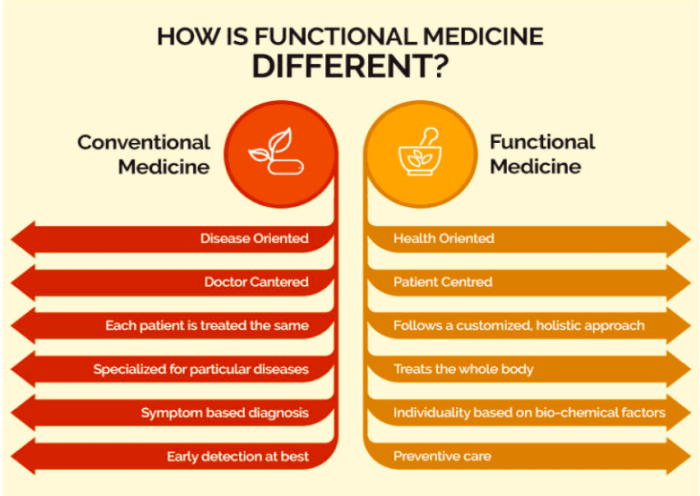
Patient care in functional medicine differs significantly from traditional healthcare in its approach. In functional medicine, the focus is on treating the root cause of the illness rather than just managing symptoms. This means that personalized treatment plans are created for each individual based on their unique genetic makeup, lifestyle, and environmental factors.
Personalized treatment plans are crucial in functional medicine as they allow healthcare providers to address the specific needs of each patient. By tailoring treatments to the individual, patients are more likely to see positive outcomes and long-term health improvements. This personalized approach also empowers patients to take an active role in their healthcare journey, leading to better engagement and compliance with treatment plans.Patient engagement and education are prioritized in both functional medicine and traditional healthcare, but the methods differ.
In functional medicine, patients are encouraged to be active participants in their care, with healthcare providers working collaboratively with them to achieve optimal health. Patients are educated about their condition, treatment options, and lifestyle changes they can make to improve their health.
This empowers patients to make informed decisions about their health and take control of their well-being.In traditional healthcare, patient education and engagement may not always be as emphasized, with a more paternalistic approach sometimes taken. Patients may be given treatment recommendations without a thorough understanding of the reasoning behind them or the opportunity to discuss alternative options.
However, there is a growing recognition of the importance of patient-centered care in traditional healthcare, with an increasing focus on involving patients in decision-making and promoting patient empowerment.
Importance of Personalized Treatment Plans
In functional medicine, personalized treatment plans are essential for addressing the unique needs of each patient. By tailoring treatments to individual factors such as genetics, lifestyle, and environment, healthcare providers can achieve more effective outcomes and long-term health improvements.
Patient Empowerment in Functional Medicine
Patient empowerment in functional medicine is crucial for fostering active participation in healthcare decisions and promoting better health outcomes. By educating patients about their condition, treatment options, and lifestyle modifications, patients are empowered to make informed choices and take control of their health.
Patient Engagement and Education in Traditional Healthcare
In traditional healthcare, patient engagement and education are also important but may not always be as prioritized as in functional medicine. However, there is a growing recognition of the significance of patient-centered care in traditional healthcare, with efforts to involve patients in decision-making and promote patient empowerment.
Last Point
In conclusion, the dichotomy between functional medicine and traditional healthcare unveils a tapestry of diverse perspectives and methodologies in the realm of healthcare. By understanding the disparities between these approaches, we gain insight into the intricate tapestry of medical practices that shape our well-being and treatment choices.
FAQ Compilation
How do diagnostic methods differ in functional medicine and traditional healthcare?
In functional medicine, diagnostic methods often focus on identifying root causes through comprehensive testing, while traditional healthcare may rely more on symptom-based diagnosis.
What treatment modalities are commonly used in functional medicine compared to traditional healthcare?
Functional medicine emphasizes lifestyle changes, nutrition, and supplements, whereas traditional healthcare may lean more towards pharmaceuticals and surgeries.
How does patient care vary between functional medicine and traditional healthcare?
Functional medicine prioritizes personalized treatment plans and patient empowerment, fostering a more patient-centered approach compared to traditional healthcare.